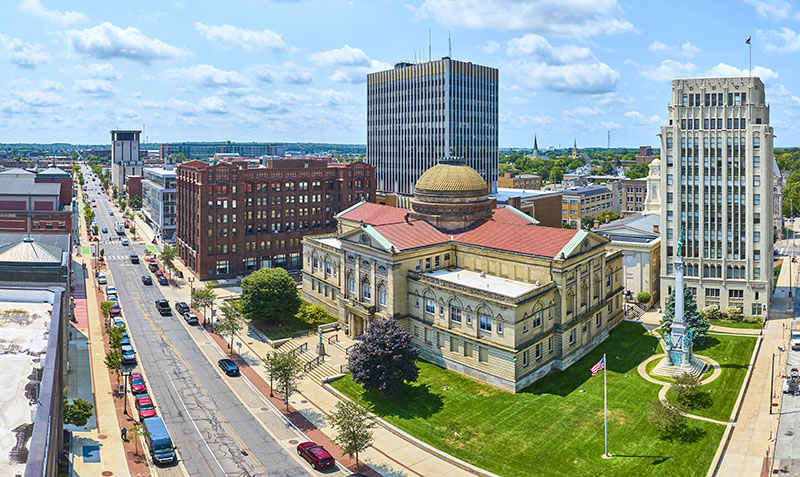
The South Bend housing market remains active in 2026, even as the national real estate market continues to slow. While rising home prices and higher mortgage rates have reduced affordability across the country, buyers in South Bend are still finding homes faster than the national average. With less competition than during the pandemic housing boom, buyers also have more opportunities to negotiate.
The Housing Market Has Changed Since 2022
During the peak of the housing market in 2022, homes often sold in less than a month as buyers competed for limited inventory. Since then, mortgage rates have increased, and home prices have continued to rise. This has made it more difficult for many people to purchase a home.
As a result, the market has become more balanced. Homes generally stay on the market longer than they did a few years ago. This gives buyers more time to make decisions and negotiate on price or repairs.
Homes in South Bend Still Sell Quickly
Even with a slower market nationwide, South Bend homes continue to sell relatively fast. In May 2026, the median home spent just 24 days on the market before going under contract. That’s one day faster than the same time last year.
Nearly 45% of homes sold within the first week of being listed, and more than 59% were under contract within two weeks. These numbers show that well-priced homes in desirable neighborhoods continue to attract strong buyer interest.
Home Prices Continue to Increase
The median sale price in South Bend reached $249,481 in May 2026, an increase of 10.4% from one year earlier. While prices continue to rise, homes are generally selling for slightly below the asking price.
The average sale-to-list price ratio was 98.64%, meaning buyers paid about 98.6% of the listed price on average. This gives buyers a little more negotiating power than they had during the competitive pandemic market.
How South Bend Compares to Larger Indiana Cities
Compared to Indiana’s largest cities, South Bend remains one of the more affordable housing markets while still maintaining strong demand.
Cities such as Indianapolis, Fort Wayne, and Evansville typically have higher numbers of homes for sale simply because of their larger populations. Indianapolis, in particular, has one of the state’s busiest housing markets, offering buyers more choices but also greater competition in popular neighborhoods.
South Bend’s smaller market means inventory can be more limited, but homes that are priced competitively continue to sell quickly. Buyers looking for affordability often find South Bend attractive because home prices remain well below many larger metropolitan areas while offering access to universities, healthcare employers, and manufacturing jobs.
South Bend Outperforms the National Market
The national housing market is moving much more slowly than South Bend. Across the United States, the typical home stayed on the market for 49 days in May 2026, more than twice as long as in South Bend.
Nationwide, only about 20% of homes sold within one week, compared with nearly 45% in South Bend. The national median sale price also reached $398,771, significantly higher than South Bend’s median of $249,481.
For buyers, this means South Bend continues to offer a combination of relatively affordable home prices and a market where desirable homes still move quickly. Those planning to buy should be prepared to act when they find the right property. While sellers can still benefit from healthy demand, especially for well-maintained and competitively priced homes.