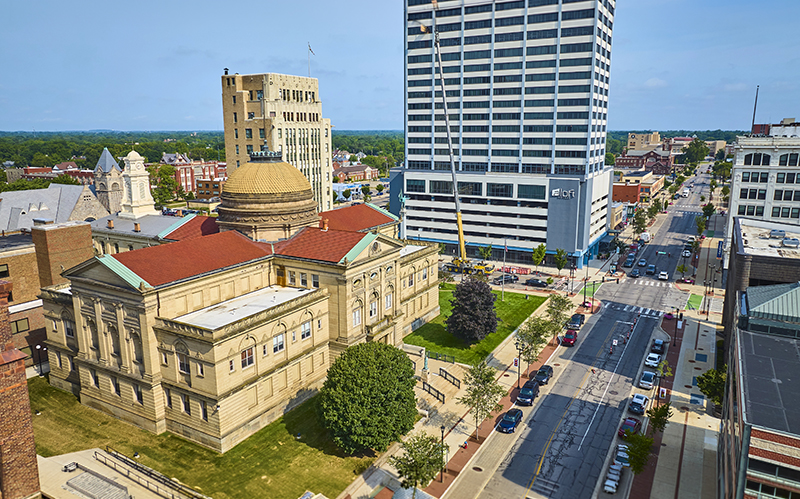
College towns across the United States are getting more attention from real estate investors in 2026. Cities that were once mostly known for football games, student housing, and university life are now being looked at as strong opportunities for rental income and long-term property growth. Investors are especially paying attention to short-term rentals like Airbnb properties because college towns often bring in visitors all year long.
A recent report from AirDNA showed that several college towns are performing well when it comes to short-term rental demand. Among the cities mentioned were South Bend, Indiana, and Champaign-Urbana, Illinois. These cities are attracting investors because they offer lower home prices compared to major metropolitan areas while still bringing in strong rental activity.
Many investors are starting to realize that college towns can provide a combination of affordability, steady tourism, and economic stability. Universities create jobs, attract students from around the country, and bring visitors throughout the year. That constant movement of people can help support the local housing market and increase demand for both long-term and short-term rentals.
South Bend Is Growing Beyond Football Weekends
South Bend, Indiana, has become one of the most talked-about college towns for real estate investing in 2026. Much of the attention comes from the presence of the University of Notre Dame, one of the most recognized universities in the country.
Football weekends in South Bend bring huge crowds into the city. Hotels often fill up quickly, and many visitors look for short-term rentals nearby. Homeowners who rent properties during football season can sometimes charge much higher nightly rates because demand increases so much during major games.
But the city’s growth is no longer limited to football weekends alone. South Bend has been developing new restaurants, entertainment areas, local businesses, and housing projects. Investors are starting to see the city as more than just a sports destination.
Another major reason South Bend is attracting buyers is affordability. Compared to cities like Chicago, Los Angeles, or New York, home prices in South Bend are still much lower. Investors who cannot afford expensive coastal markets may find smaller Midwest cities more realistic for purchasing rental properties.
Some buyers are purchasing small homes near campus, while others are investing in duplexes, apartments, or larger homes that can accommodate visiting students. The lower purchase prices can make it easier for investors to earn positive cash flow compared to higher-priced markets, where mortgage payments are much larger.
Champaign-Urbana Continues to Attract Investors
Champaign-Urbana, Illinois, is another college town receiving attention in 2026. Home to the University of Illinois, the area has a large student population and a strong local economy connected to education, technology, and research.
Unlike some college towns that slow down heavily during school breaks, Champaign-Urbana still sees activity throughout much of the year. Conferences, sporting events, research programs, campus visits, and business travel all help keep visitors coming into the city.
The area offers a wide variety of housing options. Investors can find smaller condos, older homes near campus, apartment buildings, and newer residential developments. This flexibility allows different types of investors to enter the market depending on their budget.
Short-term rental demand has also increased as travelers continue choosing Airbnb properties instead of traditional hotels. Many visitors prefer staying in homes or apartments that offer more space, kitchens, and privacy. Families visiting students often want accommodations that feel more comfortable than a hotel room.
The city’s rental market also benefits from the constant need for student housing. Even investors who do not want to operate Airbnb properties may still find opportunities with long-term rentals for students, university employees, and local workers.
Universities Help Create Stable Local Economies
One reason college towns often perform well in real estate is that universities help stabilize the local economy. Large universities provide thousands of jobs and attract students, professors, medical professionals, researchers, and support staff.
In many college towns, the university becomes one of the largest employers in the area. This creates consistent housing demand because people connected to the school need places to live nearby.
College towns also tend to support many local businesses such as coffee shops, restaurants, bookstores, grocery stores, gyms, and entertainment venues. The constant flow of students and visitors helps keep these businesses active.
Even during slower economic periods, universities often continue operating at full capacity. That stability can help reduce some of the extreme ups and downs that other cities experience during economic downturns.
Short-Term Rentals Are Changing Small Real Estate Markets
The growth of Airbnb and other short-term rental platforms has changed how investors view smaller cities. In the past, many investors focused mainly on large vacation destinations or major cities. Today, smaller markets are getting more attention because travelers are willing to stay in a wider range of locations.
College towns fit well into this trend because they already attract regular visitors. Parents visiting students, alumni attending sporting events, graduates returning for reunions, and university staff traveling for conferences all create demand for temporary housing.
Some investors now specifically search for properties within walking distance of college campuses because those areas may have stronger rental demand. Homes close to stadiums, downtown districts, and entertainment areas can also become popular short-term rentals.
As more investors enter these markets, competition is increasing. Some cities are already seeing higher home prices because of increased investor activity.
Affordability Is Driving Investors Toward Smaller Cities
One of the biggest reasons investors are looking at college towns is affordability. In many large cities, home prices have become extremely expensive over the last several years. High mortgage rates and rising insurance costs have made investing more difficult for many buyers.
Smaller college towns often provide lower purchase prices while still offering rental income opportunities. Some investors believe they have a better chance of earning profits in smaller markets compared to high-cost cities where monthly expenses can be much higher.
For example, an investor may be able to buy multiple properties in a Midwest college town for the same price as one property in a major coastal city. That lower cost can reduce financial risk and allow investors to expand their portfolios more easily.
This affordability is attracting both experienced investors and first-time buyers looking to enter the real estate market.
College Towns Still Have Risks for Investors
Even though college towns can create opportunities, they are not guaranteed investment success. Investors still need to carefully study each market before buying property.
Some cities are creating stricter rules for Airbnb and short-term rentals. Local governments may limit how many days properties can be rented or require permits and extra taxes. Investors who ignore these regulations can run into expensive problems later.
Seasonal demand can also affect income. Football weekends and graduation season may create strong profits, but slower periods during school breaks could reduce bookings.
Maintenance costs, cleaning fees, insurance, rising property taxes, and competition from other rentals can also impact profits. Some investors underestimate how much work short-term rentals require compared to traditional long-term rentals.
There is also the possibility that home prices in some college towns could rise too quickly if too many investors enter the market at the same time.
Why College Towns May Stay Important in the Future
Many real estate experts believe college towns could continue growing in popularity beyond 2026. Universities help create long-term economic activity, support local businesses, and bring new people into communities every year.
As remote work continues and buyers search for more affordable housing options, smaller cities may become even more attractive. Some people are moving away from expensive metropolitan areas and looking for places with lower living costs and steady local economies.
South Bend and Champaign-Urbana are examples of how smaller college towns are becoming more important in today’s real estate market. These cities may not be as large as Chicago or Los Angeles, but they are proving that smaller communities can still create strong housing demand and investment opportunities.
For homeowners, investors, and even renters, college towns may continue playing a larger role in the future of real estate across the United States.