A South Bend homeowner may identify the pipe entering the basement and still find the property’s water service line marked “unknown” in the city’s inventory. That is not necessarily a mistake. Different portions of the connection can use different materials, and one visible section does not settle what lies underground. The city’s public information gives owners a way to begin checking, while current planning documents show why better records remain part of the larger replacement effort.
The Service Line Extends Beyond the Basement Wall
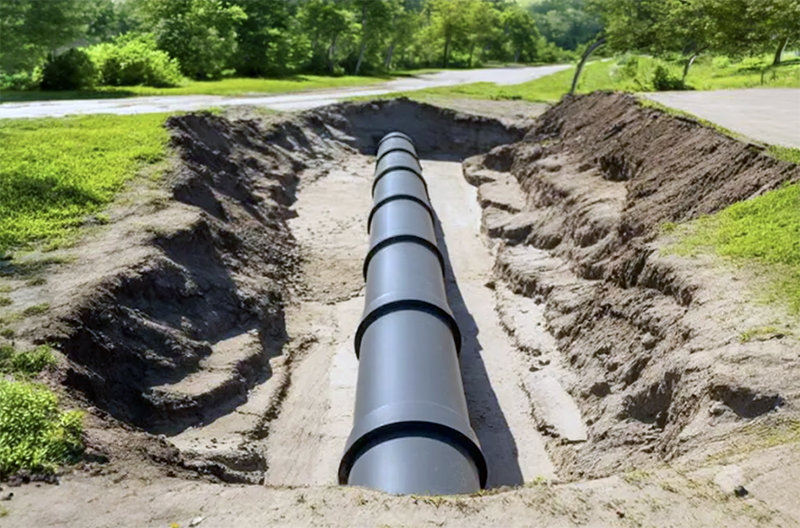
A water service line connects a building to the water main. South Bend’s water-quality materials explain that the property owner owns the connection from the main to the home or building. That makes the buried line an important part of a property file, even though it is easy to overlook during ordinary maintenance or a house showing.
The city’s 2025 water-quality report describes a pattern found in older homes: a lead section between the main and curb, followed by galvanized pipe toward the house. Seeing one material indoors, therefore, cannot establish the composition of the entire route. The report also points residents toward the city’s service-line survey and public inventory.
For a new owner, a useful first step is to ask for any earlier replacement invoice, utility letter, or contractor diagram. Look for the actual scope of work. A receipt describing new plumbing inside a kitchen does not establish that the underground service line was replaced at the same time.
An Unknown Map Entry Calls for Clarification
South Bend’s Service Line Material Inventory Map lets residents look up their address. Its 311 guidance explains that an entry can remain unknown when officials have not yet verified the section between the curb stop and the main, even after a resident reports the material entering the home. Treat that label as an information gap that requires follow-up.
Before contacting the utility, record the address exactly as shown, the date of the lookup, and any reference number on a letter. Ask which section remains unidentified and what evidence would help. Use the city’s identification instructions rather than assuming a photograph of any exposed pipe is enough.
A homeowner should not excavate or disturb a line simply to answer a map question. If the visible pipe is difficult to reach or identify, ask the utility about the appropriate next step. The purpose of the record review is to improve reliable information, not to turn an uncertain entry into an unsafe repair project.
A Material Notice Is Different From a Water-Test Result
The city’s 311 explanation makes an important distinction: receiving notice of a lead service line does not mean a water test has detected lead. A pipe inventory identifies service line materials, while a water test measures lead levels in a sample. Homeowners should consider both separately when evaluating their home’s water quality and plumbing conditions.
South Bend says residents concerned about lead in drinking water can request free testing through the utility, including by calling 311. Ask for the current collection instructions and follow them carefully. Keep the laboratory result and the utility’s interpretation together so that a number is not separated from the circumstances of the sample.
If a buyer receives a test report from a seller, ask when it was collected and what it represents. Avoid describing the whole property as permanently cleared based on an isolated document. Questions about exposure and protective steps belong with the utility and appropriate health professionals; a property listing or a home inspection summary is not a substitute for that guidance.
Replacement Planning Does Not Promise Work at Every Address
A March 16, 2026, South Bend engineering memorandum described preliminary work for a fiscal-year 2027 State Revolving Fund application. Its scope included service-line replacements and targeted investigation to improve the inventory. The document discussed schools and daycares, as well as residential services meeting qualifications.
That memorandum shows the city has begun planning, but it does not confirm that a particular homeowner qualifies for the project or has a construction date. It also does not specify how much an individual owner would need to pay. Residents should ask the utility whether the project includes their address, whether they need to sign a written agreement, and which sections of the service line the proposed work would replace.
Before agreeing to work, clarify access, restoration, and responsibility for the area around the line. Ask who handles a disturbed sidewalk, driveway, lawn, or landscaping and whether the owner must arrange anything indoors. Written answers help a household plan for disruption and avoid mistaking a general project announcement for a complete description of work at its own home.
Keep the Pipe History With the House Records
Once information becomes clearer, save it where future buyers and household members can find it. A useful file includes the inventory entry, utility correspondence, dated photographs supplied through the city’s process, test results, and any completed-work documents. Label a planned replacement separately from a finished replacement. Retain the final description of the materials and sections actually installed.
Property Records of Indiana can help organize available ownership, tax, and property background through its property profile report service. The site’s property characteristics and recorded data page also explains why public records vary in completeness. Neither resource establishes the material of a buried pipe; that question requires address-specific utility information and appropriate verification.
For South Bend residents, the next step may be as small as a map lookup and a focused call. Knowing which section is unknown, what evidence is missing, and whether any work is actually planned turns a confusing notice into a manageable set of property questions.